PROJECT:
MICHIGAN ROSS HACKATHON
ROLE:
LEAD UX DESIGNER
DATE:
OCT. 2025 - DEC. 2025
LOCATION:
ANN ARBOR, MI

BioGrace
overview.
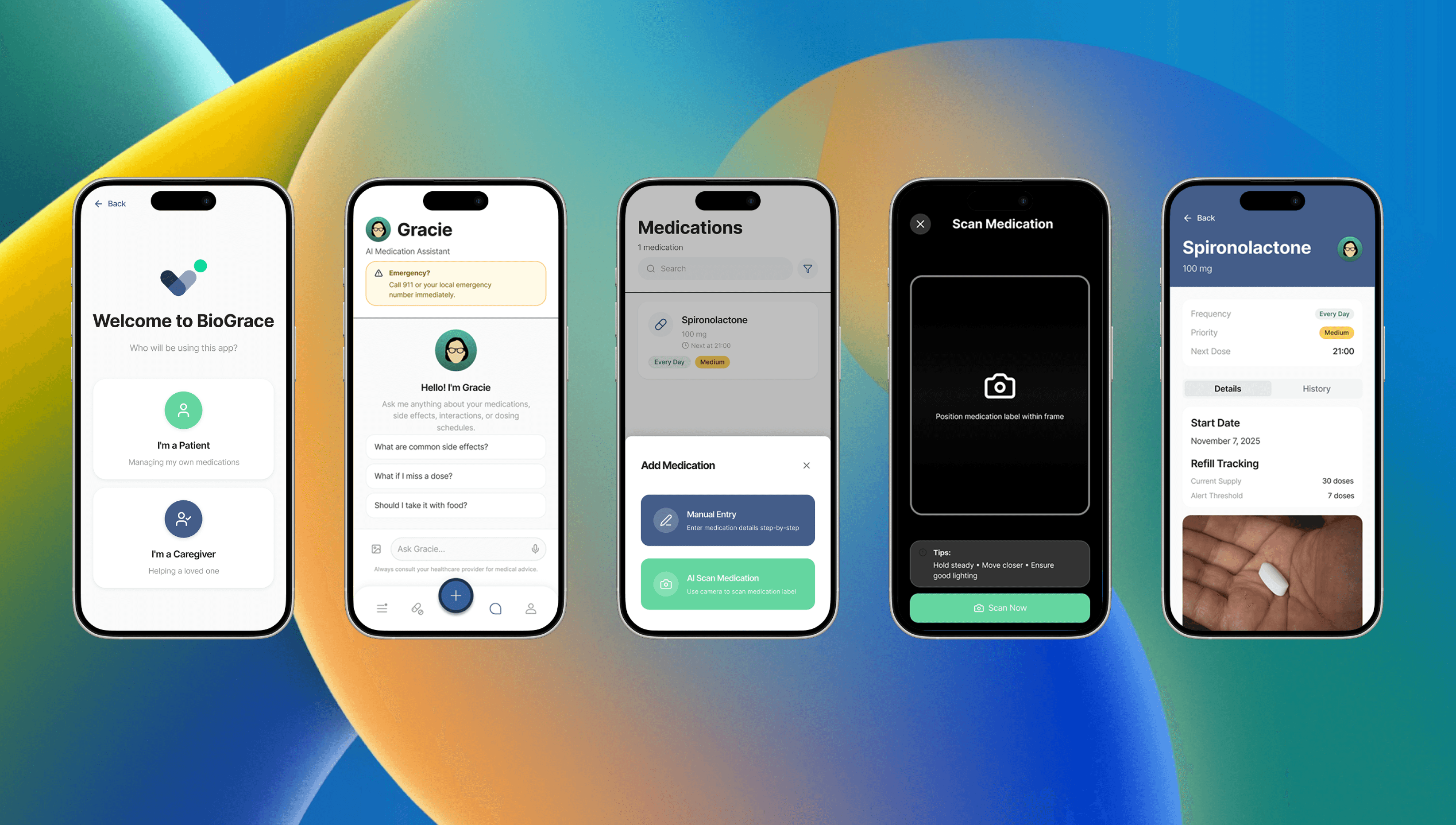
BioGrace is an AI-powered medication-management app designed to help older adults and caregivers navigate complex medication routines with greater clarity and confidence. It was developed during the 2025 six-week Michigan Ross Business+Tech Innovation Jam.
As lead designer on a six-person product team, I defined the product strategy and led the design process across research, user flows, and design system development, then used Figma Make to build a fully interactive prototype spanning 30+ screens.
problem.
Managing multiple prescriptions requires patients to track doses, schedules, refills, and medication information while coordinating with caregivers. For older adults and people managing chronic conditions, that complexity can lead to confusion, missed doses, and reliance on memory or physical notes.
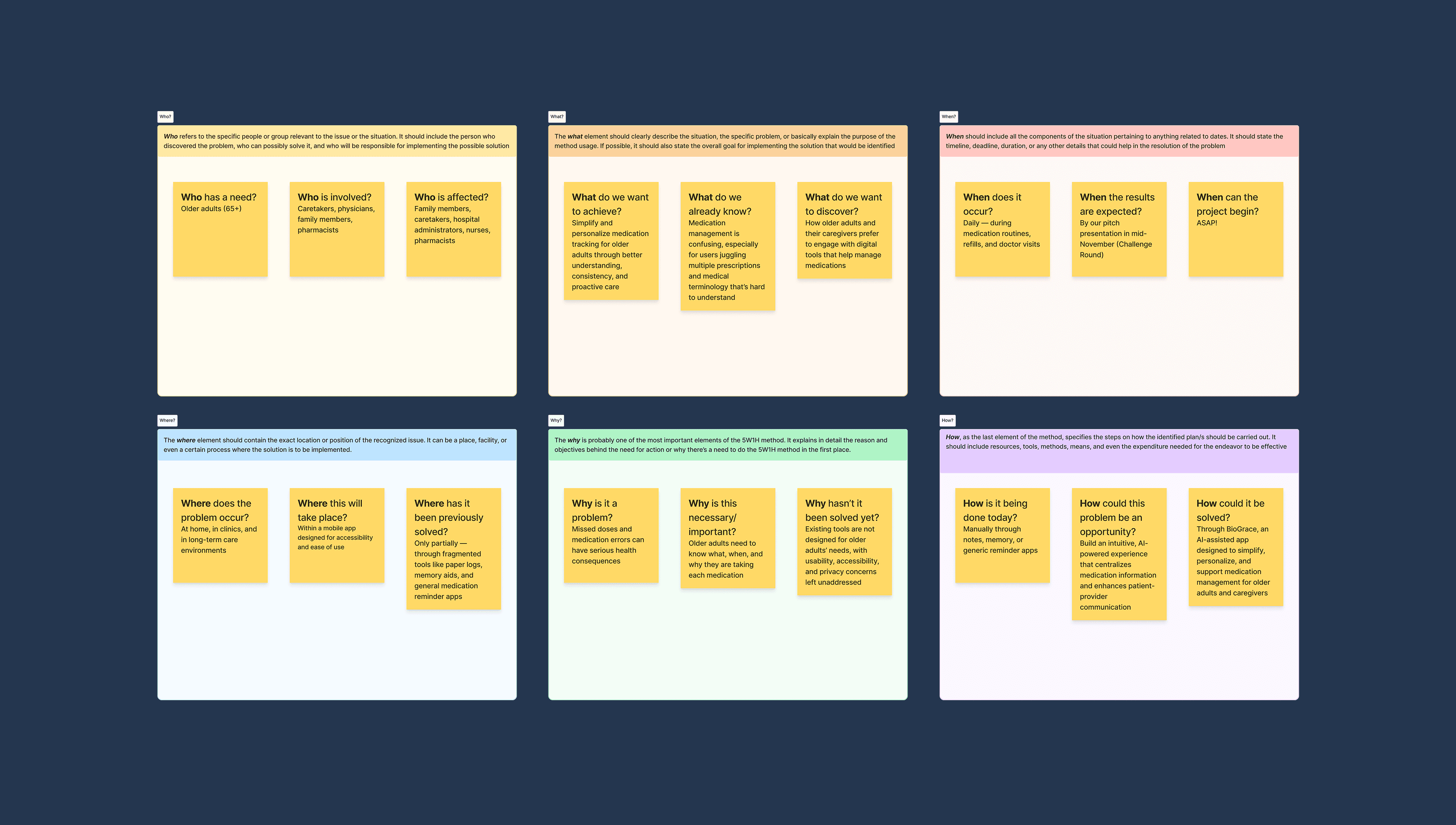
We asked: How might we create a clear, accessible system that helps patients understand and manage their medications while giving caregivers the right level of visibility and support?
solution.
BioGrace brings medication information, daily routines, and caregiver coordination into one accessible experience. The platform enables patients and caregivers to:
Add medications quickly by scanning a label or entering information manually
Understand and manage routines through plain-language medication details, flexible scheduling, priority tags, and customizable reminders
Coordinate care through caregiver access, SMS updates, exportable reports, and an AI assistant that answers questions using saved medication information
pt. 1 understanding the problem.
To understand how people currently manage complex medication routines, we surveyed 50+ adults ages 40–70. We found that:
83% relied on memory or paper notes
67% felt overwhelmed managing their medications
63% forgot a dose at least once a week
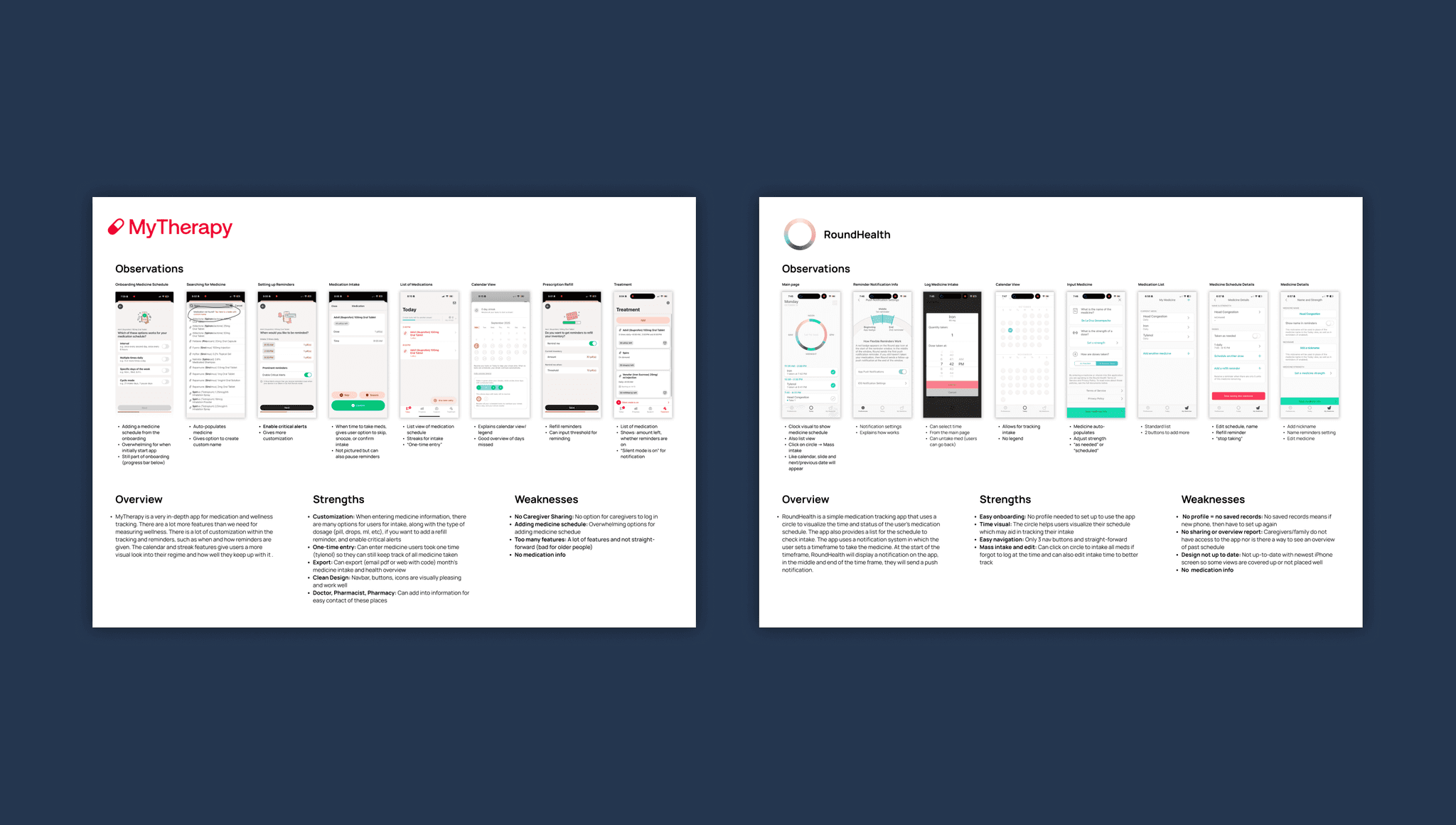
We also conducted a competitive analysis of three medication-management apps—MediSafe, MyTherapy, and Mango Health—and identified recurring gaps in accessibility, interface clarity, and caregiver support.
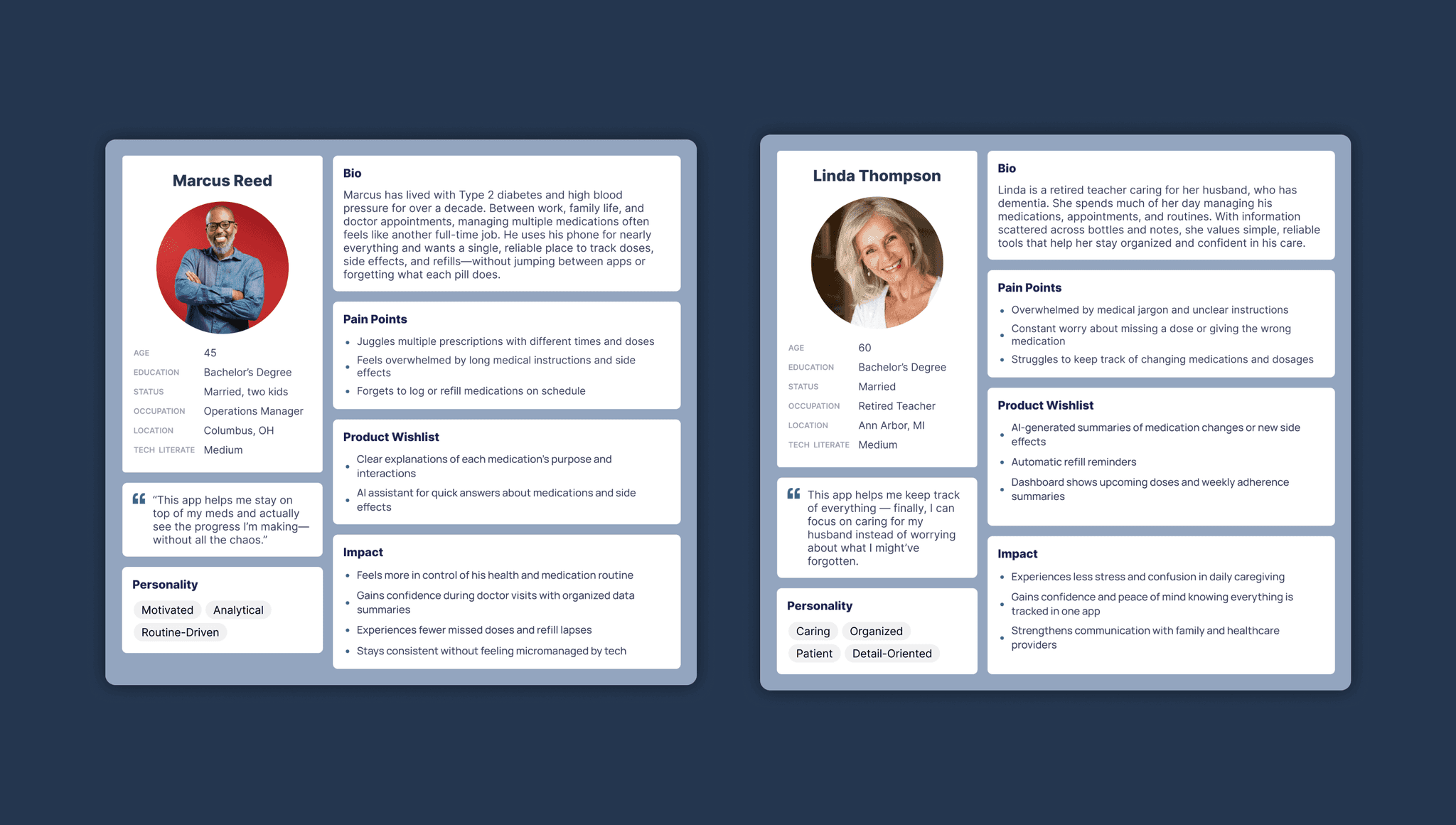
We translated these findings into two working personas representing a patient and caregiver. Together, the research established three principles for the experience: clarity, accessibility, and shared control.
pt. 2 defining the core experience.
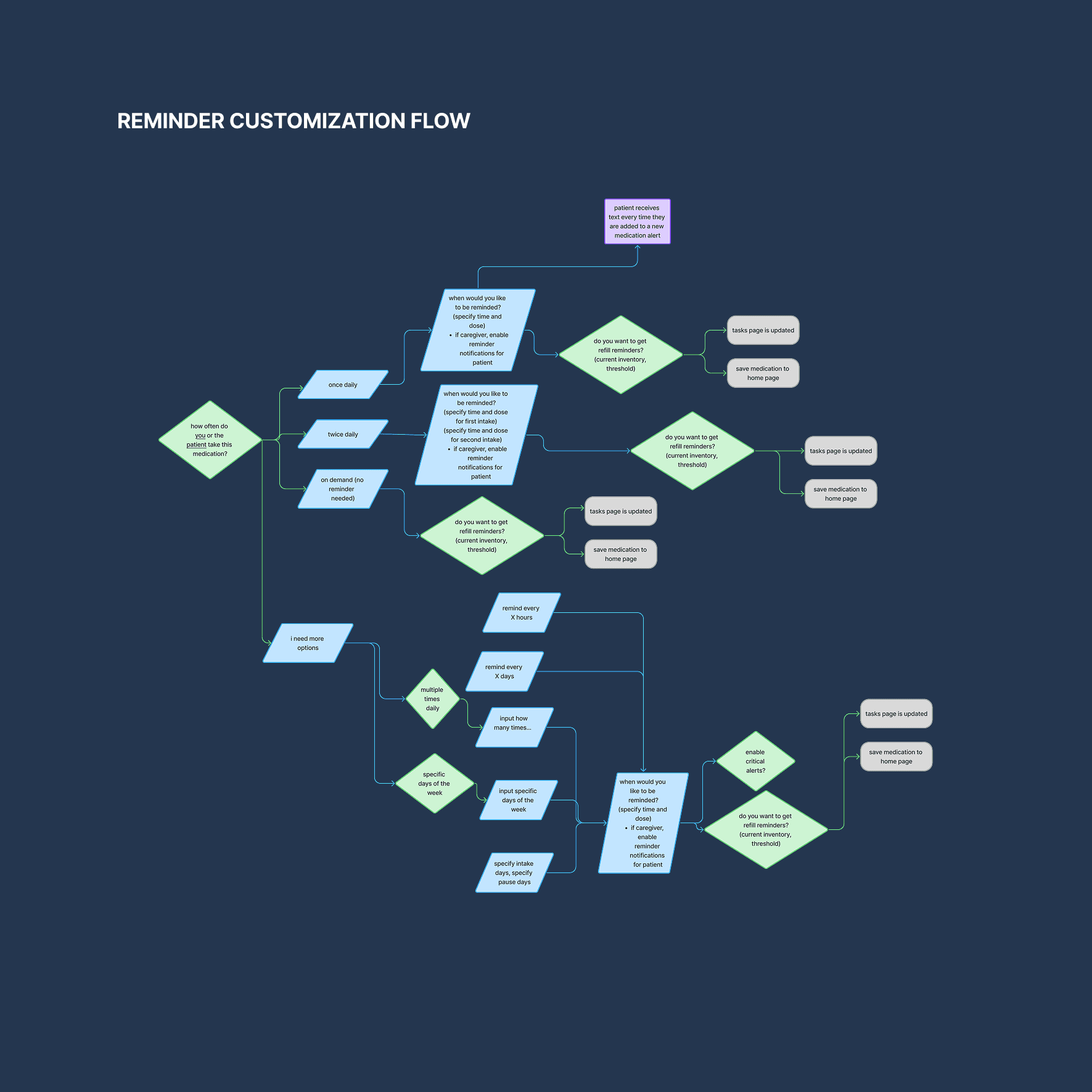
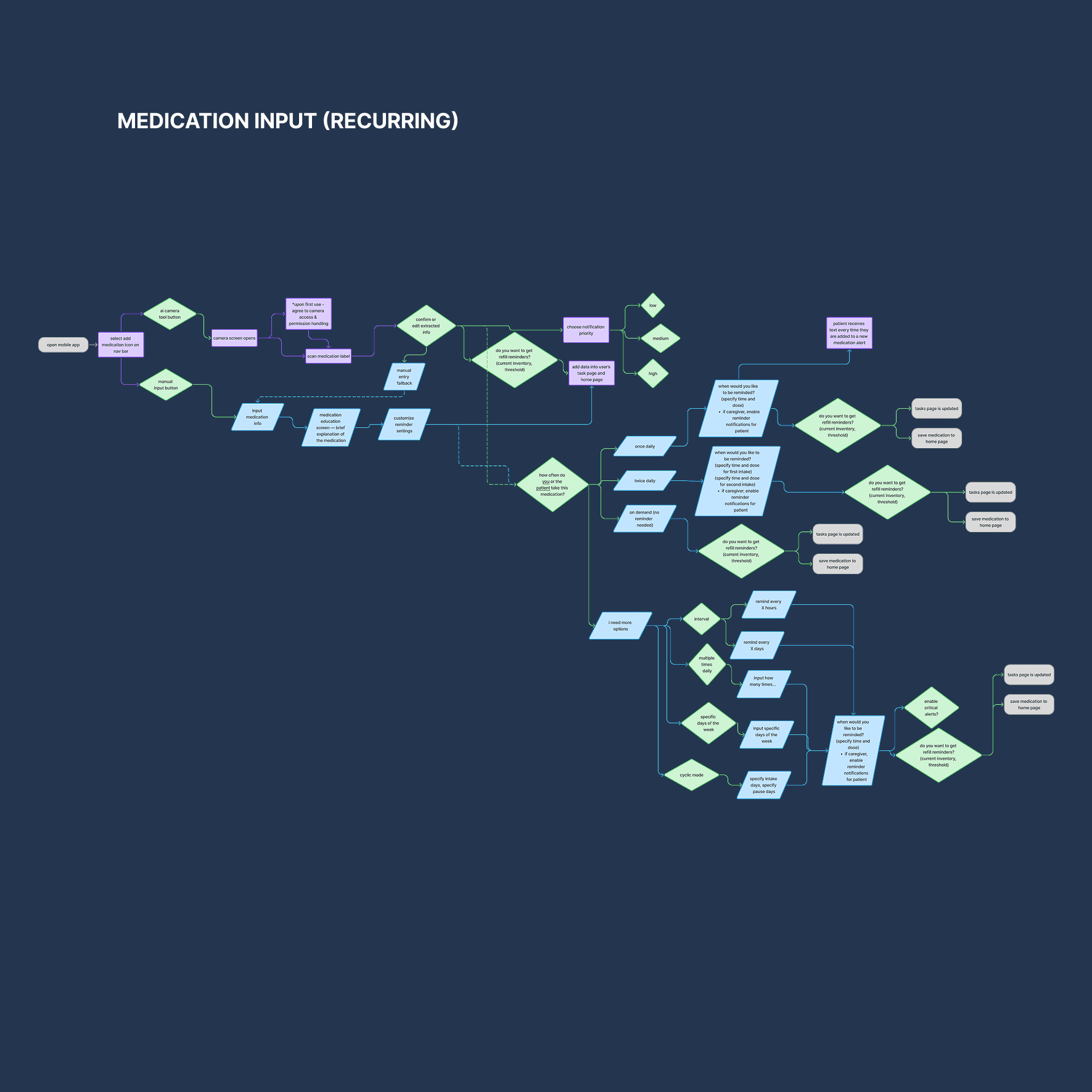
Using our research, we mapped nine end-to-end user flows around three core actions:
Add medications manually or by scanning a label
Set schedules, reminders, and priorities around individual routines
Connect a caregiver through SMS reminders and confirmations without requiring another app download
The project manager and I translated these flows into a PRD that became the team’s source of truth, connecting user needs, business goals, and technical feasibility.
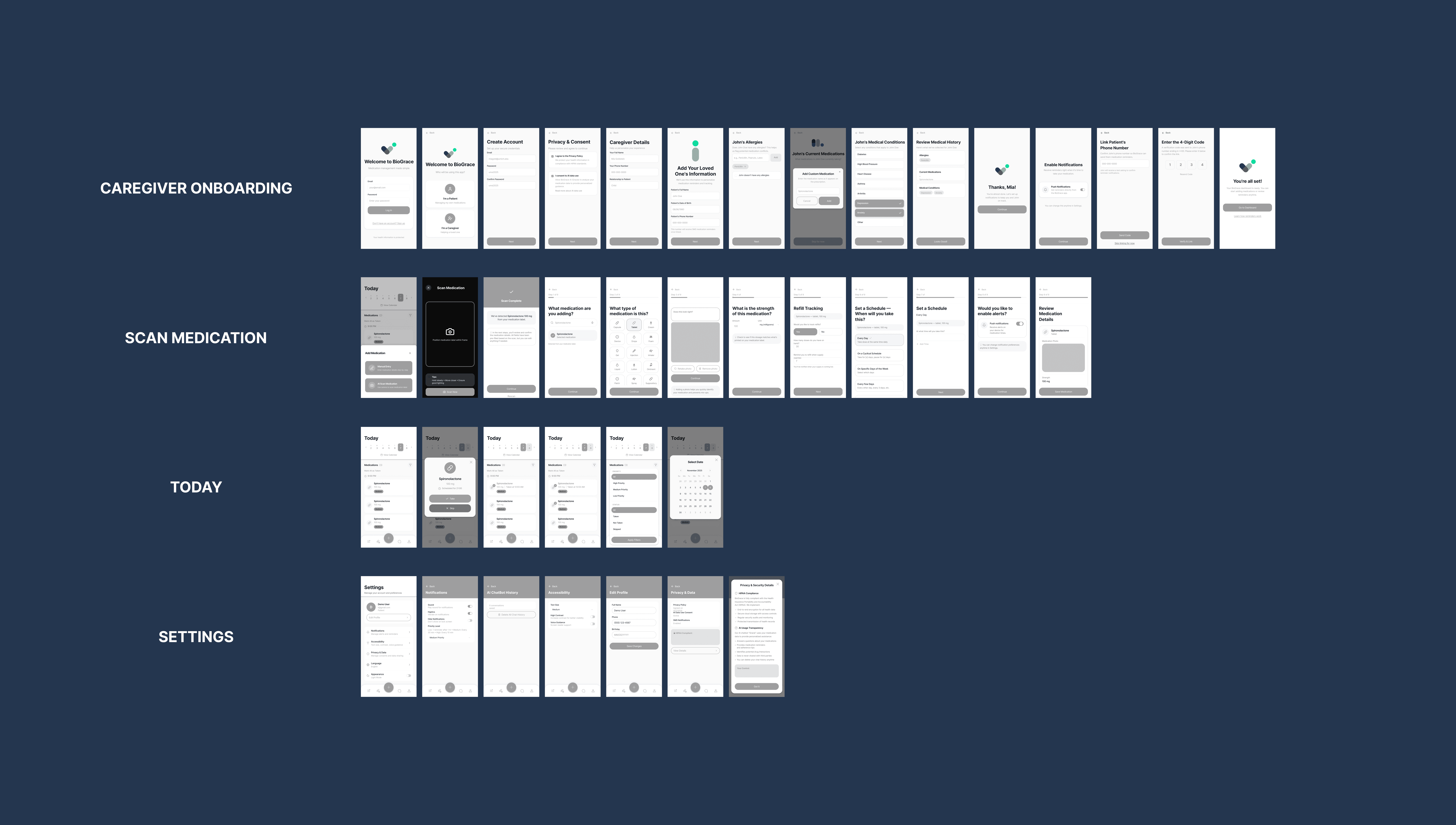
I then developed low-fidelity wireframes focused on clear information hierarchy, large touch targets, and reduced cognitive load for older adults and caregivers.
pt. 3 building the interactive prototype.
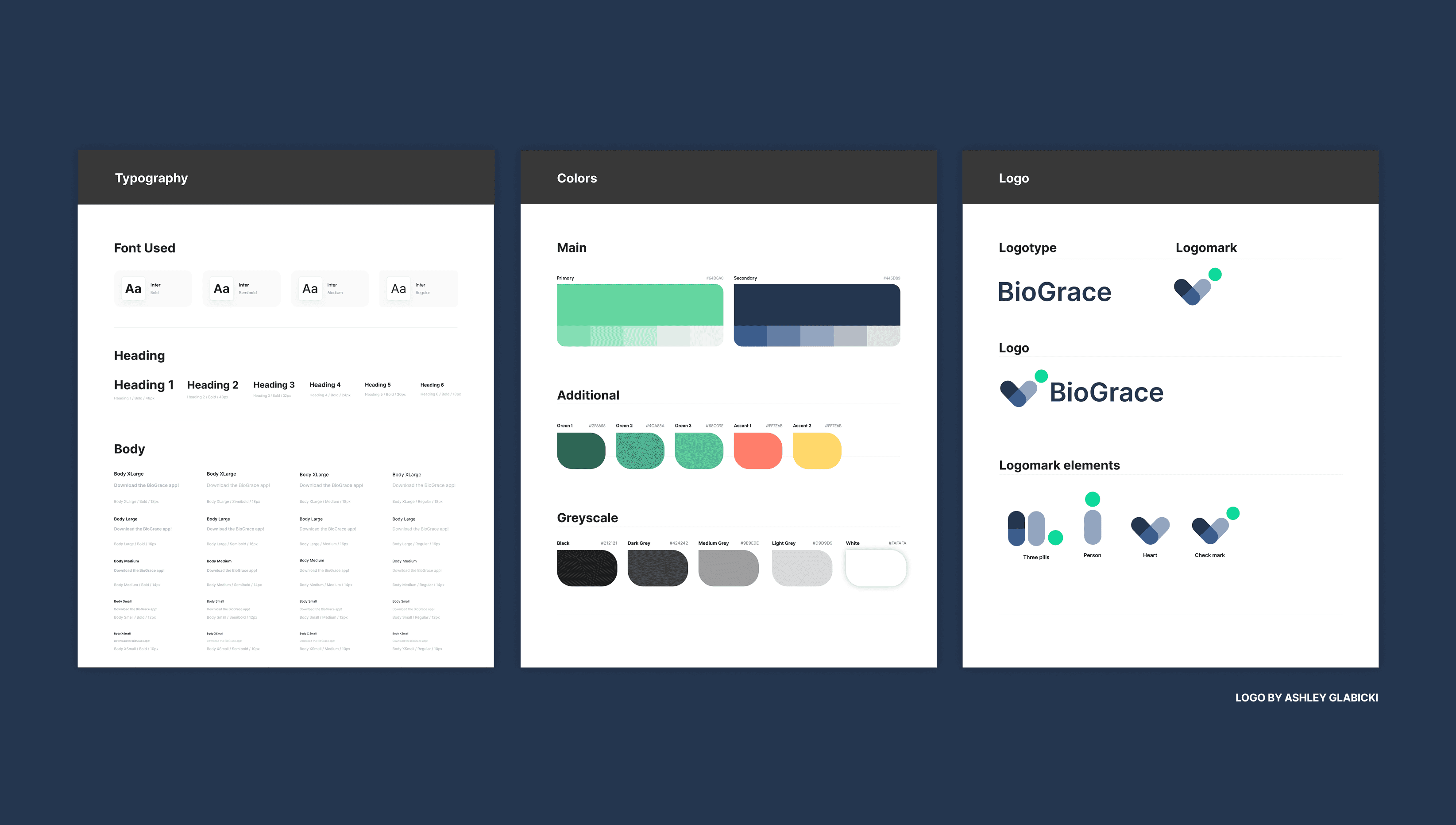
With the core flows defined, I created a scalable design system and designed 30+ responsive, high-fidelity screens with consistent components, styles, and interaction patterns.
I then used Figma Make to turn the static designs into a fully interactive prototype, bringing key experiences—including medication scanning, AI chat, scheduling, and notification triggers—to life without external code. This allowed the team to experience the complete product journey and evaluate how the features worked together.
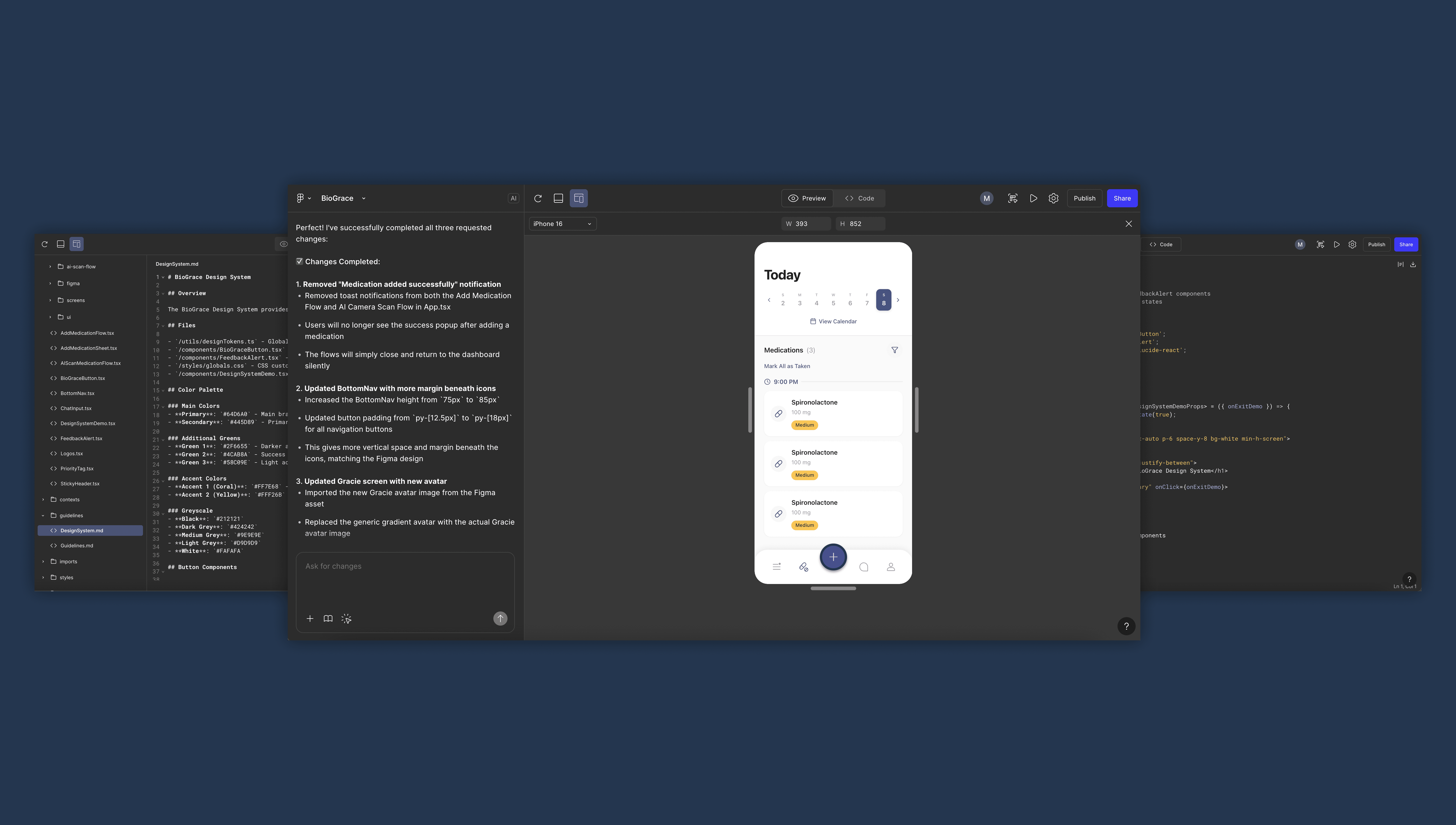
prototype.
Try it out yourself!

takeaways
BioGrace challenged me to balance user needs, technical possibilities, and business priorities while designing for a sensitive and complex problem space.
Empathy is at the heart of usability. Designing for older adults shaped the information hierarchy, interaction size, language, and number of decisions required in each flow.
A strong design system made rapid prototyping possible. Establishing reusable components before moving into Figma Make helped me build and revise a consistent 30+ screen experience within six weeks.
Cross-functional collaboration strengthened the product direction. Working with product and business teammates helped connect user needs with technical feasibility, success metrics, and long-term sustainability.
Given more time, I would test the prototype with older adults and caregivers, evaluate it against accessibility standards, and further define the privacy, permission, and safety boundaries required for AI-assisted medication support.

